

I’ve been waiting for the 12th of August 2026 for more than two years. My requirements to find a perfect place were: sunset over the sea and a high chance of clear skies. I could’ve gone anywhere between Iceland and Spain, but I picked Mallorca, one of Spain’s Balearic Islands. Which is why I’m waiting here on the edge of a cliff, next to Cap Blanc lighthouse, with my family by my side, to witness the total solar eclipse.
Models are powerful, and predicting eclipses is one of the best deterministic predictions humans make. It’s accurate to a second, and centuries in advance. Models can help us experience remarkable events.
The date, timing, and path of the Moon’s shadow can be precisely calculated. The rest needs to be planned. Preparing for a rare event like this is an endeavour which, due to its nature, can still fail (unless you can fly above the clouds). But there are ways to maximise your chances.
I’ll share what happened but first we’ll go through models I used while preparing:
Predictions
Stripped of all its magic, the physics of the event is simple, and astronomers predict it precisely. The shadow of the Moon would be passing across Earth, creating a total solar eclipse.
Decision criteria to establish the spot were based on a few factors, sorted by importance:
probability of clear skies, as dark clouds can ruin the experience
visibility of the Sun, as it’s low on the horizon and close to the sunset
combination of logistics, including how to get there, and costs
Before I decided on Mallorca, I went through models of possible weather, specifically the cloud cover. Spain itself had many potential spots. Probabilistic thinking played its role.
The Sun would be really low over the horizon, which means that a mountain or even a forest might ruin the experience. The best possible place gives us the ability to observe the sunset over the sea. The last point with logistics eventually mattered less: a few places scored similarly on this front.
When we arrived, we had additional time to validate maps, models, and plans:
Map Is Not Territory
We had spent four days before the event looking for a perfect spot. Before that, I checked possible spots using various maps, terrain models and AI tools, but these weren’t accurate. In particular, data gathered by AIs was missing important factors, and proposed spots weren’t great.
Map is not territory is a mental model described perfectly by its name. You can do your research, look at maps, check the Sun's angle on the horizon, and find satellite images. I did all of that, but nothing can replace going to these locations and seeing for yourself what wasn’t updated on the maps, where to park, and where to find a spot to camp.
I couldn’t gamble on visiting a new spot for the first time on the eclipse day.
Nothing could replace checking the territory in person and being sure that nothing would disrupt the view. Well, nothing except clouds…
Expectations
Historical weather data for Mallorca shows a 74% chance of sunshine in August, one of the best in Spain. This increases the odds of witnessing a total eclipse, yet because the Sun was low over the horizon, there was a risk of low clouds above the sea. These clouds can ruin the experience no matter what you do.
I have no control over clouds, but as Stoics preach, we can focus on what we can control. I can control my framing of the event, to shift emphasis from seeing totality to enjoying the journey itself: I’m glad to have explored a new place, even if I couldn’t see the Sun’s corona, and getting night-dark for a moment is a good enough outcome from this trip (as it happened in Reykjavik).
Judging by observations from four days before the eclipse: clouds blocked the Sun completely once, and for the remaining three days, there were some light clouds over the sea. There was a chance that we wouldn’t see it, but we were lucky, and the sky was the clearest on the eclipse day.
The Event
We are at the cliff. Waiting for something for a few years is nothing compared to 4 hours camping at the place to secure the spot. For about 50 minutes, we were watching the Moon slowly engulf the surface of the Sun. Then, the long-awaited moment happened.
At 8:30 pm, our only star disappeared, with nothing but a black disc covering it. The world around us got darker, and for the following 90 seconds, there was a glowing white corona flaring around the black disc. This is the only moment that you can witness the Sun’s corona with your own eyes.
Everything fell quiet, even the birds stopped singing, and the brightest stars suddenly became visible. Some people clapped, some gasped, some stood in silence with tears in their eyes. I was in awe.
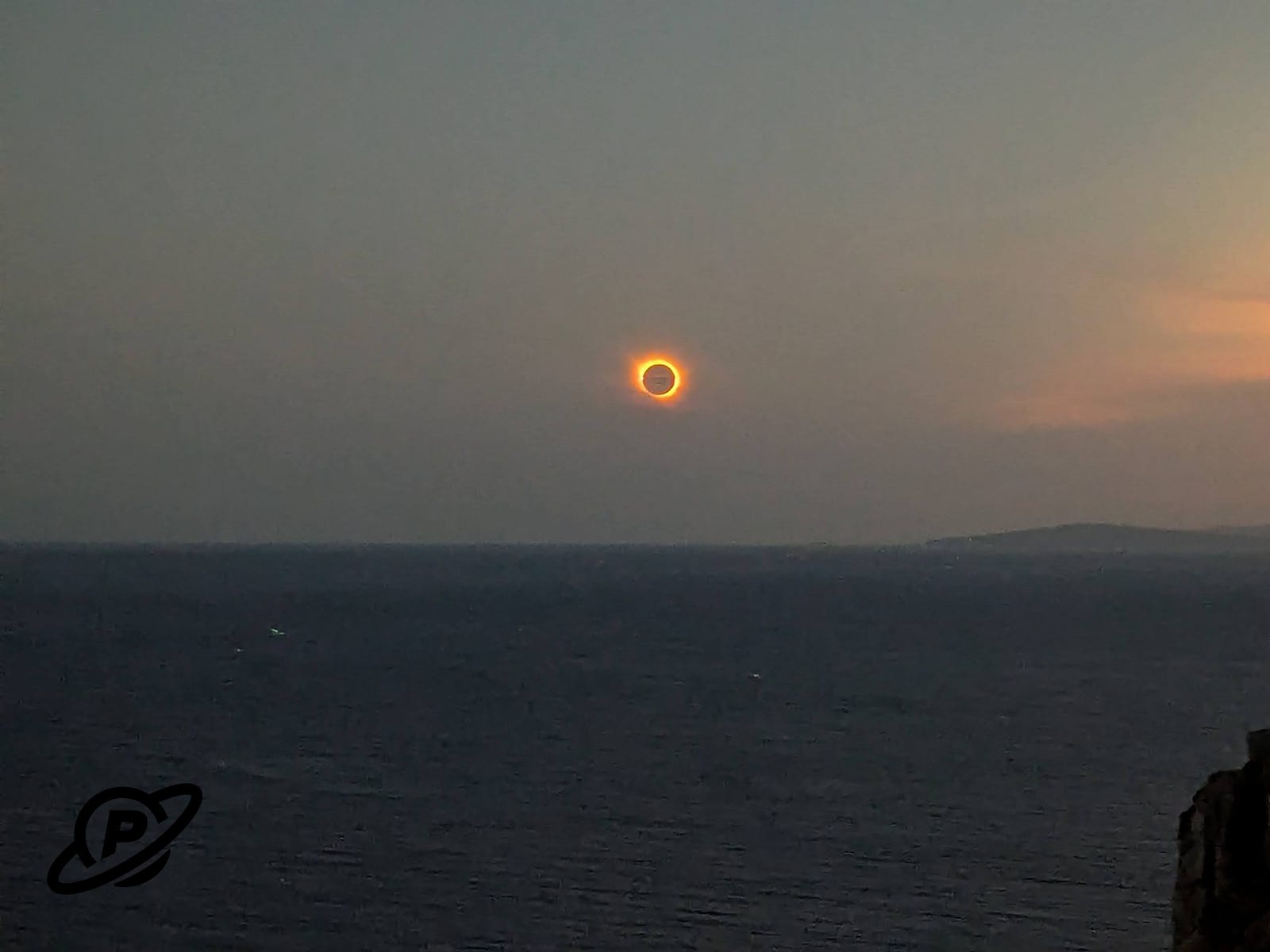
I’m unable to find better words to describe its effect:
I doubt if the effect of witnessing a total eclipse ever quite passes away. The impression is singularly vivid and quieting for days, and can never be wholly lost. A startling nearness to the gigantic forces of nature and their inconceivable operation seems to have been established. Personalities and towns and cities, and hates and jealousies, and even mundane hopes, grow very small and very far away.
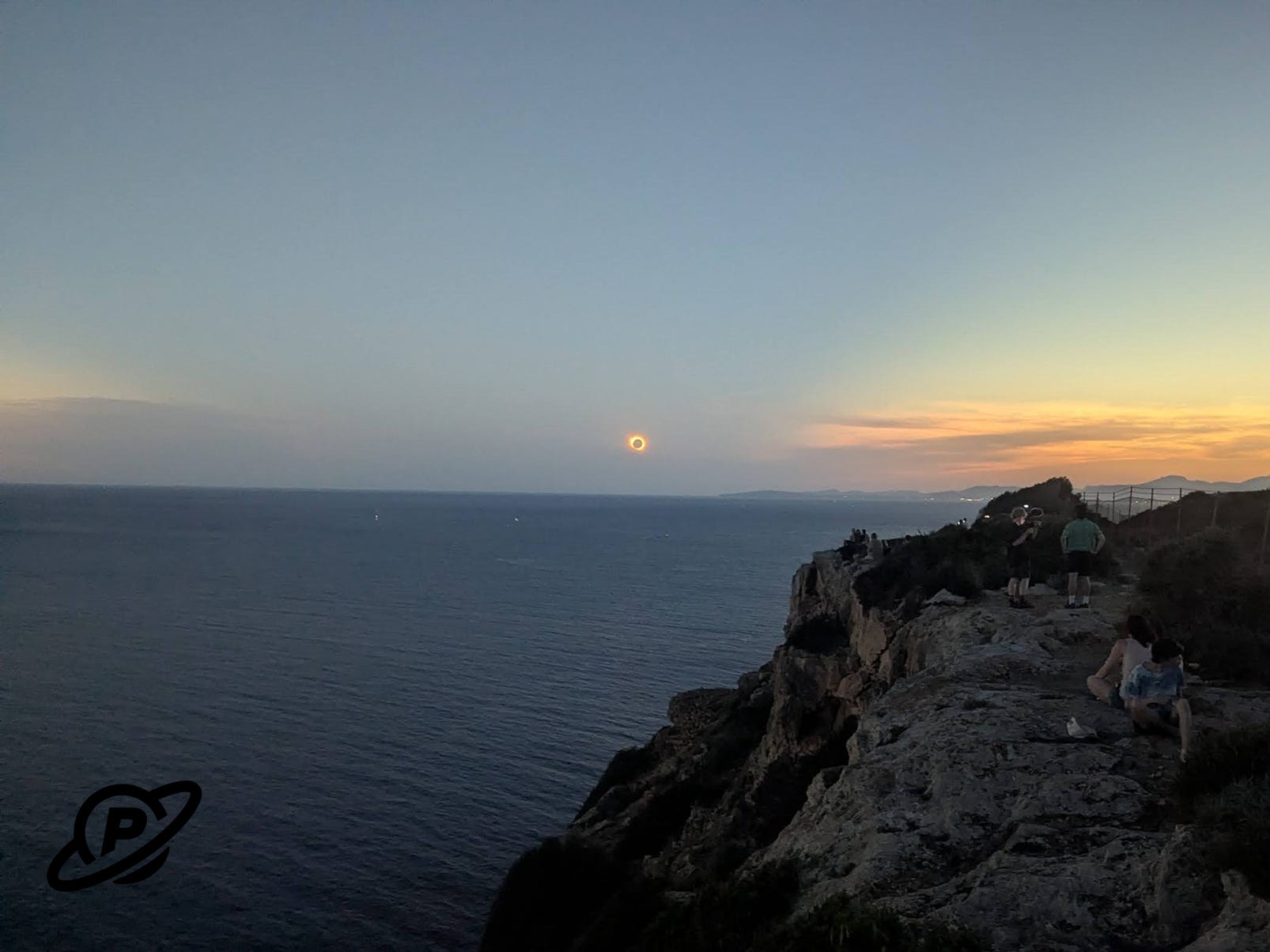
I couldn’t comprehend what this particular view might have meant to people many centuries ago who didn’t know the model of our solar system and what really was happening. It’s a truly unique shared human experience of gigantic forces of nature.
Final Thoughts
Models help us predict reality. Some things are easier to model, like when and where to see the eclipse. Others need verifying in person, like the exact spot to stand. Finally, there’s the weather: too complex to model fully, it remains uncertain, and that’s where probability comes in.
Using the right models, verifying them against reality, and navigating uncertainty helped us see the glowing ring of white fire.
Would you like to see the Sun’s corona with your own eyes?
Thanks for reading,
— Michał
P.S. The next total solar eclipse (August 2, 2027) will cross Spain, North Africa, and the Middle East. Some have nicknamed it the Eclipse of the Century, as totality will last more than 6 minutes near Luxor (three times longer than this year’s), making it the longest until 2114.
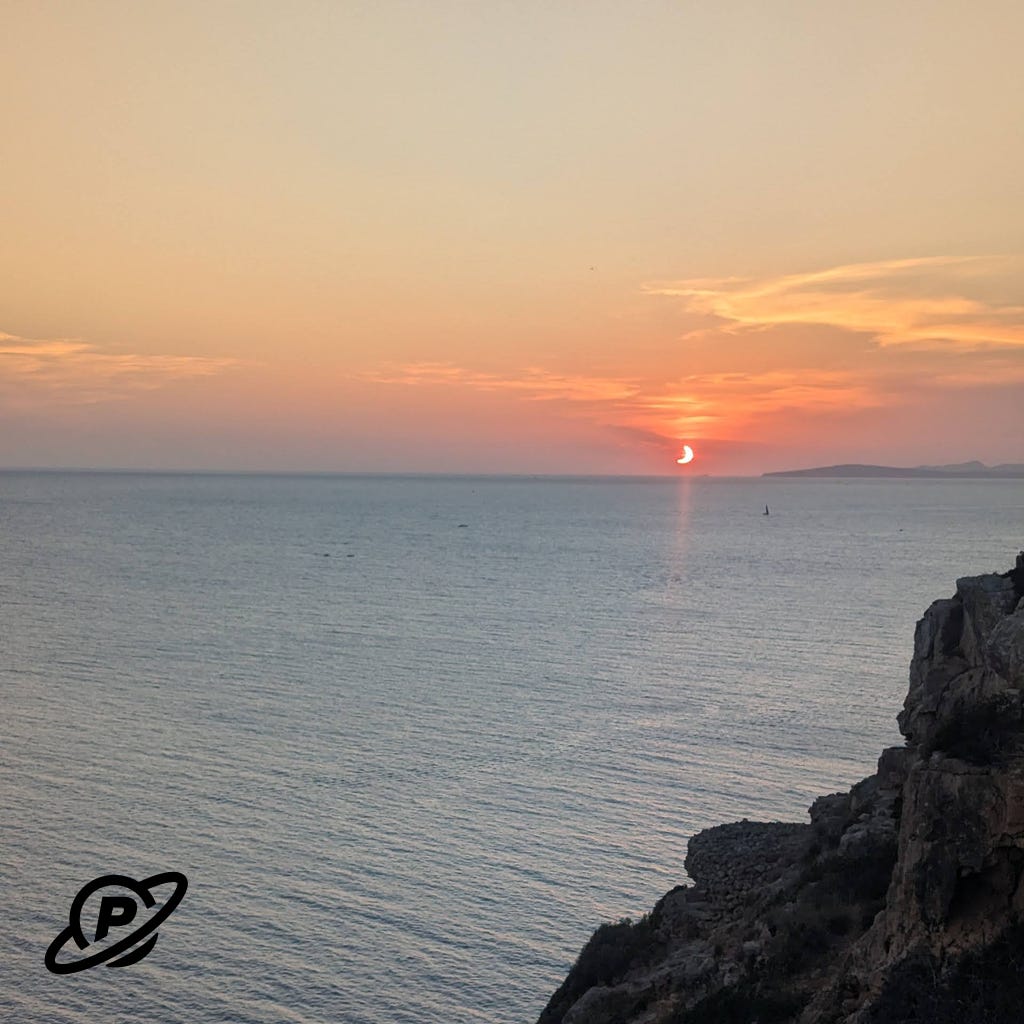
P.P.S The moon started its way off, and in addition to totality, we got a remarkable sunset with a partially eclipsed crescent-sun diving into the sea:
Post Notes


Discover Weekly
Content worth your time (eclipse-themed):
We sent a camera to space to film the solar eclipse – Veritasium
The Solar Eclipse That Made Albert Einstein a Science Celebrity – Britannica
Podcast (Live Sessions)
Homepage | Spotify | YouTube | Apple Podcasts | Castbox | Pocket Casts
Connect
LinkedIn | Substack Profile | TopMate | X | Bsky
lol these shots are amazing. like the stoic framing :)