

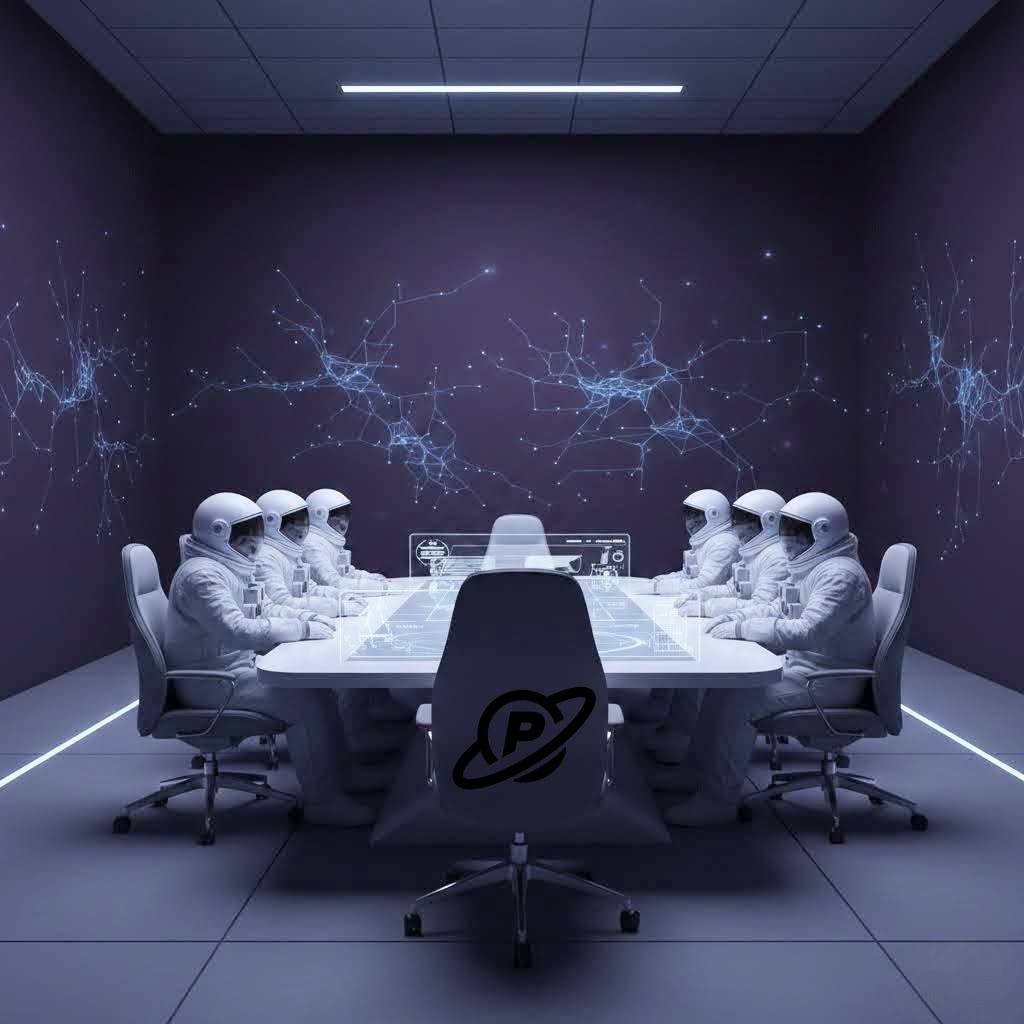
Howard Schultz, the CEO of Starbucks, insisted on leaving two chairs empty during leadership meetings.
One chair represented their customers, and the other their employees. When thinking through decisions, leaders were forced to imagine the perspective of the people “sitting” in those chairs, as if they could raise their own voice in the discussion.
The company decided that we don’t have a budget for the scheduled bonuses. I needed to write the communication to my teams. I tried to imagine their context, then talked to one of the team members who would get the message. It gave me several critical points to cover that were obvious to me but not to them.
For example, I planned to start with “budget constraints”, which means nothing to engineers. I realised they needed to hear first that their work was valued, and this wasn’t a performance issue. That reframing made the difficult message much easier to receive.
Considering others’ perspectives doesn’t just help with communication. As Howard Schultz pointed out, it is also a key way to stay aligned with company values.
Practice
Deliberately forcing yourself to consider different perspectives is one of the most useful ways to really understand a situation.
Here are three approaches:
Just talking helps you uncover what they think.
Stakeholder roles help you consider people who are affected.
Six Thinking Hats help you consider how to think about the problem.
Talking
This is the starting point. I’ve seen it forgotten way too many times.
Simply talk to stakeholders to uncover their point of view.
Questions like: “How does this look from your side?” or “What are you worried about here?” can help tremendously.
Stakeholder roles
The empty chairs idea can be extended. This exercise uses “hats” as simple artefacts to switch perspectives. Each hat represents a different stakeholder. You can do it with real hats, labels on paper, or virtually.
It works like this:
Pick 3-5 personas that matter for your decision but are not in the room: customer, product manager, CEO, support team, sales team, etc.
Assign each persona to a team member.
Discuss the problem while everyone argues solely from the assigned “hat” point of view.
Rotate hats between team members as long as you need.
The goal is to make “perspective” visible. Can you think of how it feels to play a different role?
Assuming someone’s perspective will never replace their real opinion. There are always things that are unknown to you but obvious to them, so having real conversations makes these exercises much stronger. This isn’t consensus‑building. You’re not trying to make everyone happy or find a compromise that pleases no one. You’re trying to see the full picture before you decide.
Six Thinking Hats
Instead of taking the perspective of different stakeholders, you can also switch between different thinking modes. That’s what the Six Thinking Hats exercise, designed by Dr. Edward de Bono, is about.
Each team member wears a different colored hat, which represents a specific thinking mode:
White Hat — focuses on facts, data, and information without interpretation.
Yellow Hat — looks for benefits, opportunities, and optimistic possibilities.
Black Hat — identifies risks, problems, and what could go wrong, critical and cautious thinking.
Red Hat — expresses emotions, feelings, and intuitions without needing justification.
Green Hat — generates creative ideas, alternatives, and new solutions.
Blue Hat — supervises the process itself, setting agendas and ensuring all perspectives are heard.
By “wearing” each hat in turn, teams ensure that every angle gets attention before deciding.
The Hard Part
If taking others’ perspectives helps so much with decisions, why is it so difficult?
Perspective-taking requires being humble and being open to being wrong. It is about accepting that my perspective might be partial and doesn’t represent the full picture. I know that sometimes I stick to my own perspective for too long, because I’m just afraid to be wrong.
Your default perspective is just one possible reference point. Before you make your next important decision, try at least one more.
Sometimes, the second perspective changes everything.
Whose voice is missing? Ask that before your next important decision.
Thanks for reading!
— Michał
Post Notes

Discover Weekly — Shoutouts
Great articles which I’ve read recently:
Your Team Has 15 People Now. Here’s How AI Helps You Lead Them All by Gilad Naor
I Achieved Zero Goals in 2025 (And I’m Glad I Did 😄) by Adler Hsieh
How Organisational Dynamics Break Collaboration by Szymon Baranowski
Connect
LinkedIn | Substack DM | Mentoring | X | Bsky
Asking for stakeholder input always helps. That's why we have so many meetings. Any big business decision would need input from product, engineering, security, sales, marketing, etc. These perspective form the decisions and their details, so that it avoids disasters in the future.
But I doubt that having two empty chairs in the meeting room will achieve anything. There are always empty chairs in meeting rooms 😄
And thanks for the shoutout :)