

It’s November 2023, and I’m standing on a seaside promenade with two friends. I open a bottle of non-alcoholic wine, take out my phone, and tap “publish”. This newsletter is officially live.
Before this moment, I talked endlessly about sharing my writing online. But it was just talk. For years, I talked about it, but no action followed.
One of the most dangerous things for me when planning is sharing my plans with others. Talking about a possible future gives me a false sense of achievement and makes me less likely to act.
Planning is important, but learning happens by doing.
To make the “doing” part easier, we can use three mental models from physics: activation energy, friction, and inertia.
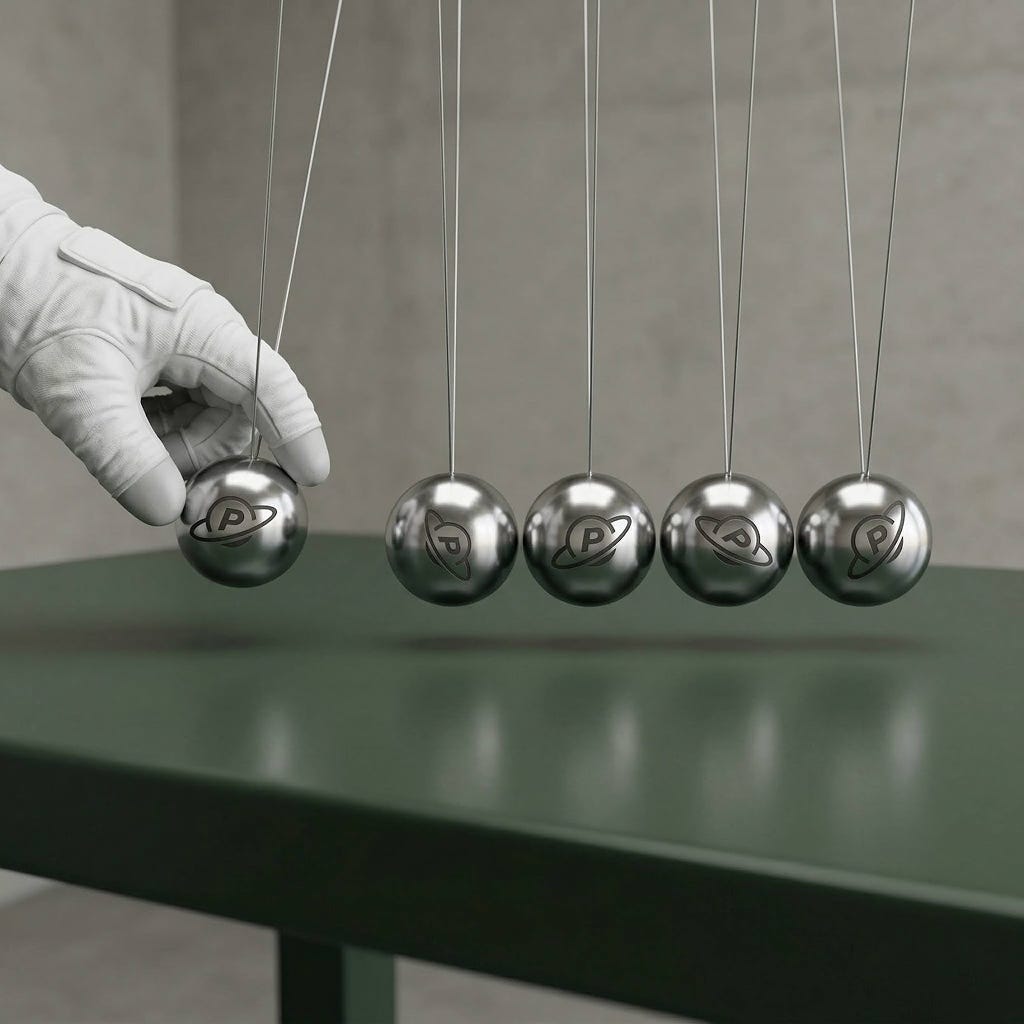
Activation Energy
The activation energy needed to start the newsletter was huge. The fear of sharing publicly was real, but I also kept finding excuses. Too much work, no time for side projects, a need to focus on running. I only found the necessary force when the social cost of letting my friends down became greater than the effort required to start.
I’ve never shared this, but my newsletter was initiated using Ghost (an open-source publishing platform). I was publishing articles on my local machine, in private. By the time I migrated to Substack and went online, I already had 24 articles “published”.
Practice:
When the barrier feels too high: Add external social pressure or a deadline, so not starting is perceived as more costly than starting.
When you want to start more easily: Shrink the first step. Start or build in private.

Friction
Want to improve your diet choices? Move to Poland.
I used to enjoy cold, zero-sugar fancy drinks full of preservatives. They were not the healthiest choice. I tried to quit, including a few failed attempts to go cold turkey, but my country lawmakers made it so much easier.
Poland recently launched a 0.50 PLN (approx. 14 cents) deposit for plastic bottles and aluminium cans. The friction of storing and returning them was enough to make me stop buying them altogether. My desire to drink them was lower than the effort required to deal with the deposit.
When I work on a publishing schedule for a given month, it is much easier to write when I already have a theme for upcoming articles. Having a plan for the next month reduces friction because I know what to write about.
Practice:
To do an activity more often: Think about how to reduce friction.
To do an activity less often: Think about how to increase friction.

Inertia
Am I writing weekly articles because I enjoy it, or simply because I cannot stop?
This touches on a common debate: which matters more, motivation or discipline? Inertia helps me maintain discipline. It acts as an invisible force that keeps me publishing weekly, no matter what.
Inertia is about the difficulty of changing states. The larger the mass of an object, the more force is needed to change its trajectory. If you want to stick to a new habit, think about how to ensure inertia keeps it going.
It is much harder to stop activities that have been part of life for a long time. I don’t even have to think about commitments like regular running or publishing weekly articles. The same can happen in companies: people attend meetings simply because they have always been on the calendar.
Pausing to ask, “Is this still useful, or is it just inertia?” can improve your schedule by releasing more time to do what you want to do. I had been playing chess regularly for a few years, and learned many decision-making lessons in the process. I stopped in January after realising I was doing it more out of inertia than intention.
Practice:
Review routines where you rely on inertia. Do you continue because you want/need, or because of inertia?
When designing a new process or activity, think about what needs to be done so it just flows with inertia with no additional force needed, once activation energy has been used.

Final Thoughts
Before I aim at the next big thing, I remind myself: “Keep your vague plans secret before you start”. Keeping early-stage plans to myself lowers my activation energy and reduces friction. But then, being specific about what to promise publicly helps me to deliver.
Look at your own goals & routines:
Where do you need more activation energy?
Where should you reduce or increase friction?
What are you still doing purely out of inertia?
Thanks for reading,
— Michał
P.S. Mental models are a great start, but a good productivity system can help to reduce friction even further. You can find out the best system for your work by taking this quiz.
Post Notes

Discover Weekly — Shoutouts
Great articles which I’ve read recently:
Podcast (Live Sessions)
Homepage | Spotify | YouTube | Apple Podcasts | Castbox | Pocket Casts
Connect
LinkedIn | Substack Profile | TopMate | X | Bsky