

The Lenses series collects thoughts that shift how you see things.
Enjoy today’s lenses:
1. Compressed words
We compress infinite complexity into finite language.
— Anton Zaides, Explaining, understanding, and data compression
I often wonder how words play their roles. We take meaning for granted, but it’s only our meaning. Our words can mean different things than the words of others. I was on a walking tour over the weekend. The guide asked questions I couldn’t clearly understand, not because of the language, but because his words carried a slightly different meaning than mine.
Thankfully, there is a cure for it. We can ask for more words of description, or rely on people’s actions.
I use every possible opportunity to advocate for writing. Writing distils our thoughts and makes the invisible visible. However, putting thought into someone else’s mind is diluted and interpreted every time in a different way.
Our words are just a map of meaning behind them. Amazingly, we can operate in spite of it.
How do you check if your words have a similar meaning for others?
2. Identity steps
The ultimate reason for setting goals is to entice you to become the person it takes to achieve them.
— Jim Rohn, Brain Food, No. 675 – April 5, 2026
I like to think about each atomic action that we are taking, not just goals.
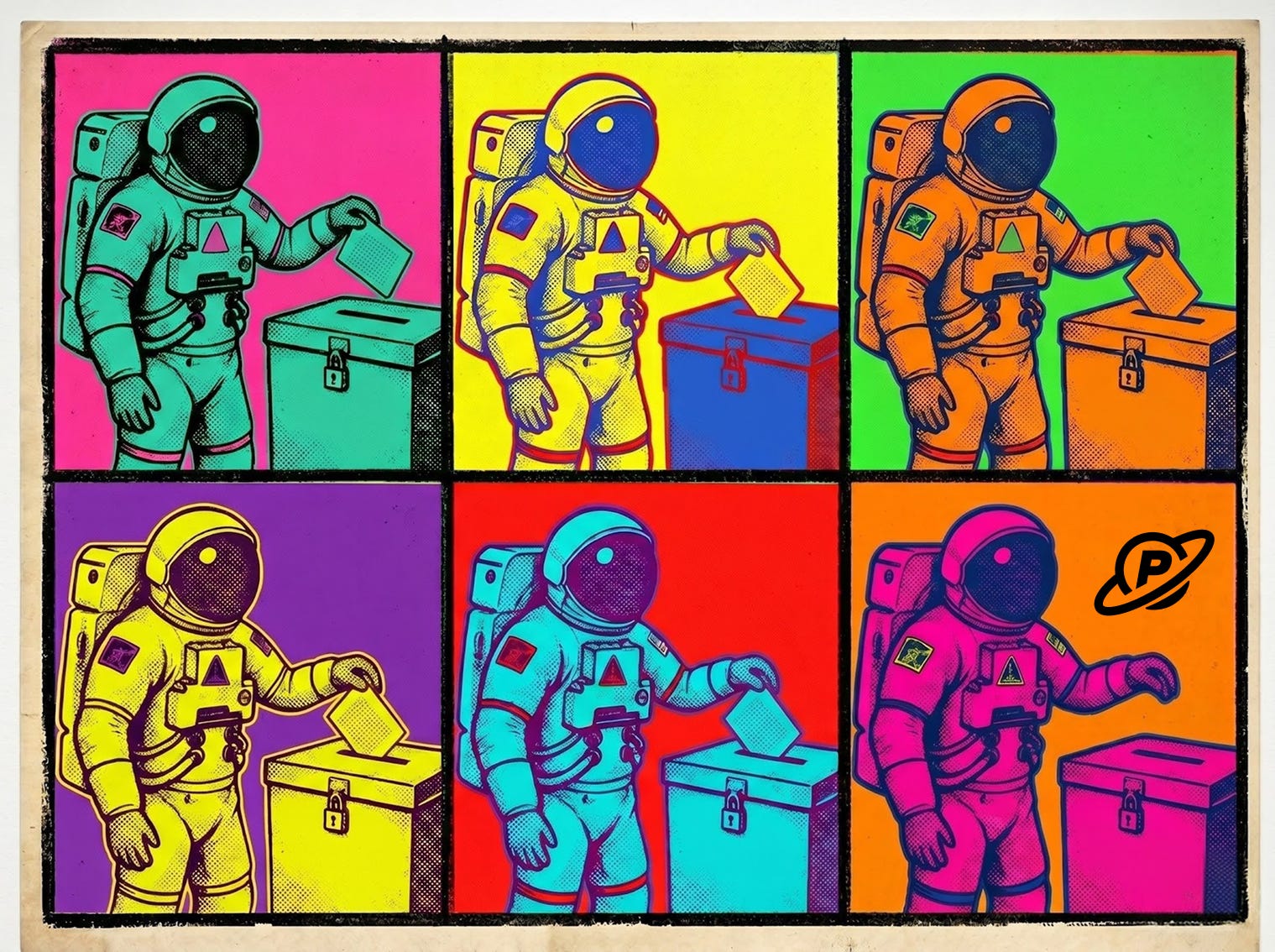
Each action is a vote. These votes sum up into our identities. Each time I go for a run is a vote for my runner’s identity. When I wake up earlier, it’s a vote for being a morning lark, although one vote won’t change election results. Night owls party wins every time.
Each day, I have a few questions to check if my daily steps are heading in the direction I planned and I want to. It’s aligned with “becoming the person” from the quote.
Aren’t our goals just taking one identity step with each one?
Do your goals play a role in changing your identity?
3. Borrowed opinions
The rise of social media as the primary form is social interaction changed the way that we judge people.
We once used to judge people mostly based on their deeds, but in the age of social media we judge people mostly based on their words and opinions because that’s really all we see of them.
Since we’re defined by our opinions, there is a pressure to have an opinion on everything.
Problem is, people generally don’t have the time or the will to research everything they are expected to have an opinion on, so they copy the opinions of others.
And the result of this is that there are precious few original thinkers.
In this way, the culture war is largely two armies of NPCs being ventriloquised by a handful of actual thinkers.
— Gurwinder Bhogal, 3MM: NPCs, Housing & Arguments
This is extensive. It can be followed up and analysed from so many angles.
I know that my thoughts aren’t original. The majority is a synthesis of everything I picked recently, filtered by my perception.
I paused to list a few people, or groups, whose words are responsible for my opinions this year.
MY FRIENDS, so many conversations, both virtual and in-person, I blindly repeat some of their opinions. Most of my recent conversations revolved around the future of AI and how it evolves.
Alex Hormosi, who acts as a motivator, each time I feel too lazy. I especially enjoyed seeing a bit of a different side of him when he interviewed his mentor.
Derek Sivers, through How to Live, still one of my favourite books
Chris from Modern Wisdom, their year planning template still resonates, but I recently started reading his newsletter, and I found Gurwinder’s quote there.
The more I talk with someone or the more I consume their content, the more my opinions align with theirs.
Do you notice who your biggest source is of “your” opinion?
1 + 2 + 3
These lenses aren’t supposed to be connected, but this week they are.
Voting for your identity (2nd lens) is heavily influenced by James Clear. I’m borrowing his thoughts. It connects with taking actions as proof of words. When we don’t interpret the language clearly, we can look at one’s actions (1st).
Thanks for reading,
— Michał
Post Notes
Podcast (Live Sessions)
Homepage | Spotify | YouTube | Apple Podcasts | Castbox | Pocket Casts
Connect
LinkedIn | Substack Profile | TopMate | X | Bsky