

How will the current AI revolution unfold?
As the popular saying goes: history doesn’t repeat itself, but often, it rhymes. This makes it difficult to predict the future, however, understanding paradoxes from the past can help.
William Stanley Jevons was living in England when it was deep into the industrial revolution. Long before electricity and long before code. The coal industry was booming, and many people started predicting that with the higher efficiency of steam machines, the demand would get lower. But Mr Jevons thought quite the opposite.
In his book “The Coal Question” he stated that increased efficiency will lead to higher demand which may eventually lead to depleting coal mines throughout the UK.
His assumption was correct. As steam engines got more efficient, people found new uses for them, like trains. Demand went full steam ahead (pun intended). The same happened for other resources, like electricity or water.
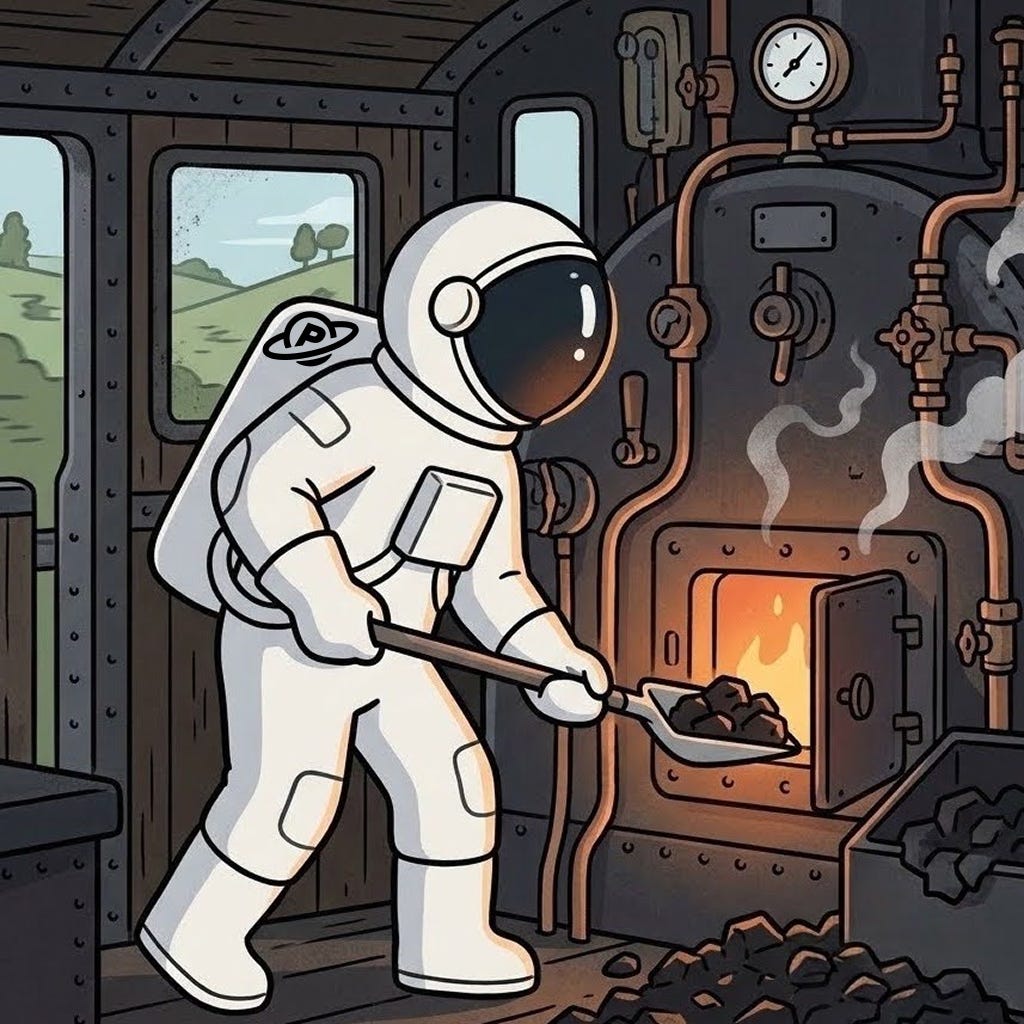
This is Jevons paradox and it states that: when using a resource becomes more efficient, more ways to use it are found, and demand explodes.
How does this connect with AI and code?
Well, let’s assume that code is a resource.
Writing code was expensive and required years of technical knowledge and practice. LLMs have changed this, and lowered the cost of producing code significantly. How many things weren’t produced before because of expensive code? App Store app submissions jumped 84% in the first quarter of 2026. The code is cheaper now.
For the Jevons effect to be applied, the following conditions are needed:
technological change increasing efficiency
decreasing consumer price
decreasing price increasing quantity demanded (when demand is elastic)
Open questions, with no answers:
Is demand elastic for the apps business to explode?
How will cheap access to code change the distribution of services we use?
Will apps be custom-built for individual needs in the future?
As final thoughts, one thing is worth reminding:
The entry barrier might be shifted as the cost of experimenting is much lower, but it doesn’t change much about what we use. The question is what will happen with demand.
Solving problems and customer pains is here to stay, no matter the price of code.
Thanks for reading,
— Michał
Post Notes
Discover Weekly
Content worth your time:
The Motivation (Why do I write?) by Rands (Michael Loop)
The death and revival of the hands-on Engineering Manager by Anton Zaides
The 4 (and a half) step process I use to change habits by Dariusz Sadowski
Podcast (Live Sessions)
Homepage | Spotify | YouTube | Apple Podcasts | Castbox | Pocket Casts
Connect
LinkedIn | Substack Profile | TopMate | X | Bsky
some already found huge use for ai, others hate it, but whatever i see is the tip of the iceberg.
1. still not everyone can afford it to use as a day to day coding tool
2. still don’t run on consumer hardware
if these changes i’d consider that a tipping point in adoption