

One of the best skills in decision-making is being able to determine when to stop thinking and commit. When dealing with such similar alternatives, where the differences are almost negligible, far too much time is wasted deciding between them.
I was certainly guilty of this. I wanted to get the best result, whether it was hiring candidates, deciding what articles to write, or my month-long research into which action cam to buy (which was eventually stolen anyway). It’s as if my brain craved maximising outcomes, even when not feasible.
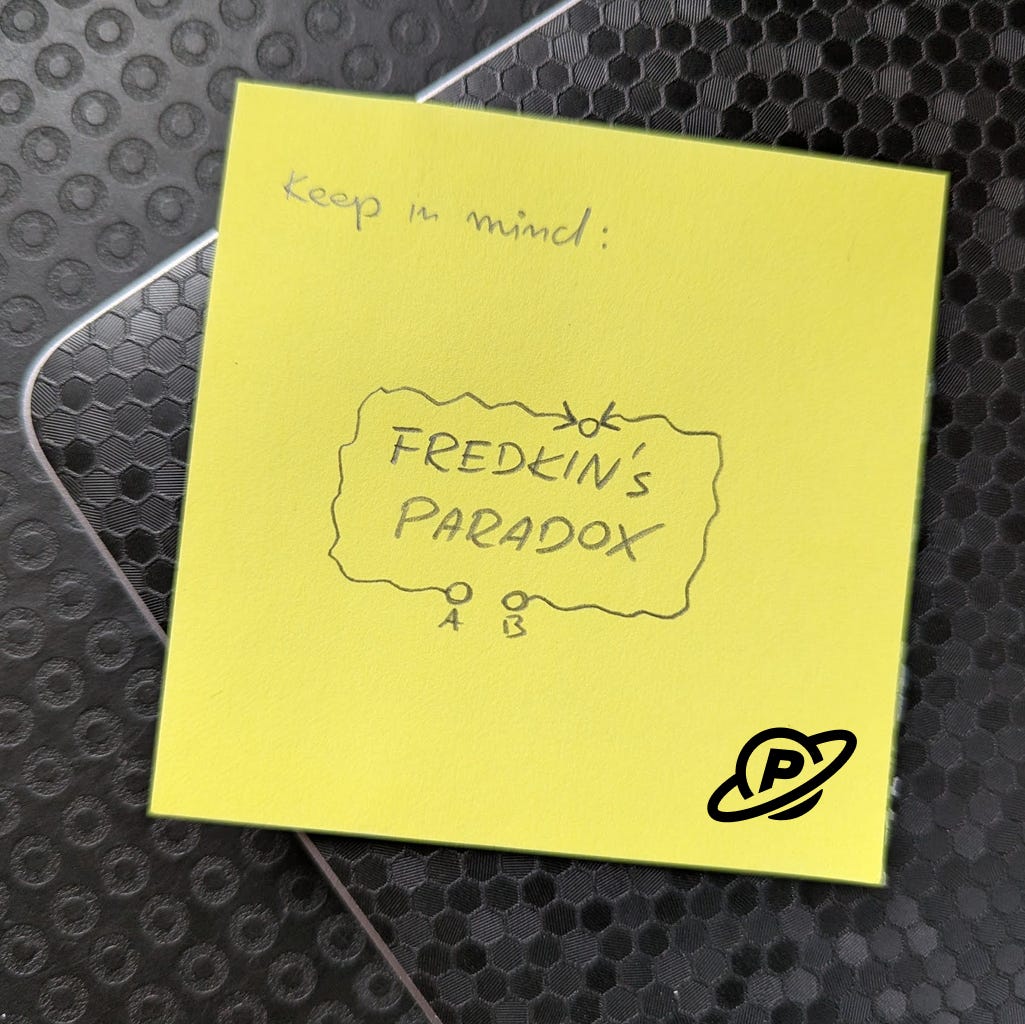
This has a name: Fredkin’s Paradox. It’s an observation by American computer scientist and physicist Edward Fredkin. He stated that as the options become more similar to each other, deciding between them becomes more difficult, and consequences become less significant.
These are three things that work for me to avoid wasting time on decisions:
realising that it doesn’t matter and that the consequences are almost the same
realising that time is the only resource we can’t get back
going random or letting my gut decide for me
Next time you face similar alternatives, think of Fredkin’s Paradox: push yourself to release the urge to pick the very best option, as all these similar options are good anyway.
How do you decide between very similar options?
Thanks for reading,
— Michał
P.S. Mr. Fredkin was an interesting figure: jet pilot, computer scientist, physicist, but also a successful businessman. He created his own digital philosophy where computation and information are the fundamental building blocks of reality – Remembering the Improbable Life of Ed Fredkin (1934–2023) and His World of Ideas and Stories
Post Notes
Discover Weekly
Content worth your time:
Podcast (Live Sessions)
Homepage | Spotify | YouTube | Apple Podcasts | Castbox | Pocket Casts
Connect
LinkedIn | Substack Profile | TopMate | X | Bsky